

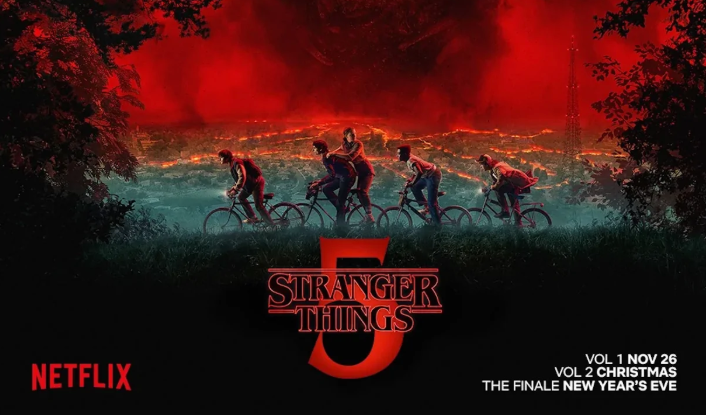
After three long years and eight emotional episodes, Stranger Things has finally concluded its epic journey through the Upside Down. While the final season stumbled in places, leaving certain threads dangling and logic occasionally taking a backseat to spectacle, it ultimately delivered what mattered most: a heartfelt ending that honored these characters we’ve loved for nearly a decade.
The fifth and final season wastes no time plunging back into the chaos. Set in fall 1987, Hawkins remains scarred by Vecna’s rifts, the town under military quarantine, and our beloved gang united by a singular mission: find and kill Vecna. What follows is a rollercoaster of nostalgia, terror, and emotion that feels both familiar and fresh.
The season’s greatest strength lies in its return to the core relationships that made us fall in love with the show. Watching Mike step back into his leadership role with newfound maturity, seeing Eleven fight with absolute determination, and witnessing the gang navigate one final adventure together provided the emotional anchor this finale desperately needed. These moments of connection, whether it’s Dustin’s graduation speech or the quiet science between the characters who’ve grown up together, are where the season truly shines.
But…let’s address the Demogorgon in the room. Season 5 isn’t perfect. Not by a long shot.
Throughout its eight episodes, the season introduces mysteries it doesn’t quite resolve. Plot threads from earlier seasons occasionally vanish into the ether. Character motivations sometimes shift without adequate explanation. And yes, there are moments where you’ll find yourself thinking “Wait, but what about…?”
The military quarantine subplot, while visually compelling, raises questions that never get satisfactory answers. Certain character arcs that seemed poised for major playoffs disappear in unexpected ways. And while the Duffer Brothers promised to reveal what the Upside Down truly is, some viewers may find the explanations leave room for interpretation—perhaps, too much room.
The pacing also proves uneven. The first volume bursts with energy and those signature Stranger Things thrills. The second volume occasionally meanders, caught between wrapping up storylines and setting up the finale. Some subplots could have been trimmed to give more breathing room to the moments that truly matter.
Here’s the thing, though: despite these missteps, Stranger Things 5 succeeds where it counts most. It understands that we’re not just here for perfect plot mechanics or airtight worldbuilding. We’re here for the characters. We’re here for the friendships forged in basements and battles. We’re here for the found family that reminded us why stories about kids on bikes saving the world never get old.
The finale episode, “The Rightside Up,” delivers an emotional conclusion that earns its tears. Without spoiling specifics, it offers closure and hope. Yes, you might wish certain storylines had been explored more deeply. Yes, you might have questions about specific plot mechanics. But when the final credits roll, you’ll likely feel satisfied in the ways that matter.
The performances throughout remain stellar, with the young cast demonstrating just how much they’ve grown as actors over nine years. The production values are blockbuster-level, the musical choices as on-point as ever (Purple Rain for the Mike and El scene was absolutely crazy), and those signature Stranger Things moments of pure cinematic joy still hit exactly as they should.
Stranger Things Season 5 isn’t the flawless masterpiece some hope for. The 56% audience score on Rotten Tomatoes versus the 83% critics’ score tells the story of a divided fanbase. Some are enchanted by the emotional journey, others frustrated by the loose ends.
At its core, Stranger Things was never really about perfect storytelling. It was about heart, friendship, and the magic in believing in something bigger than ourselves. It reminded us of the power of standing together against darkness. It gave us characters who felt real, relationships that mattered, and a world that sparked our imaginations. And in the end, it gave us hope—the most important gift any story can offer.
Is it a perfect finale? No. But it’s a finale that loves its characters as much as we do. And sometimes, that’s enough.